Clean, Green, and Safe: The Case for Parks and Green Space as Public Health Infrastructure


William Penn Foundation's strategic plan commits to a more just and vital Philadelphia. The latest data from Pew's 2026 State of the City report is cautiously encouraging — population inching up, and homicide trending down dramatically, here and nationally. The Foundation’s funding priorities for Environment and Public Space are part of that story, and on July 31 we hosted a panel to elevate cross-cutting themes from across those priorities. “How Green Space Contributes to Public Health and Safety” brought together a public health researcher, a hospital-based community collaborative, and a longtime Southwest Philadelphia community leader to show, with data and with lived experience, exactly how community greening, outdoor programming, and parks investment add up to public safety and public health infrastructure.
Many will be familiar with some of the more obvious returns on “cleaning and greening” related investments like illegal dumping enforcement, green stormwater infrastructure construction, garden preservation, or urban tree planting. Such work reduces flood risk, mitigates urban heat, beautifies neighborhoods, and connects us to nature and to each other. But what about reducing gun violence? Improving mental health? Lowering asthma rates? Is cleaning and greening, in a real sense, medicine? We didn't want to make that case without strong evidence, so we asked Michelle Kondo, a research social scientist with the US Department of Agriculture Forest Service and affiliate faculty at Drexel and Penn, to show us the underlying research.
Evidence for Greening Mounts
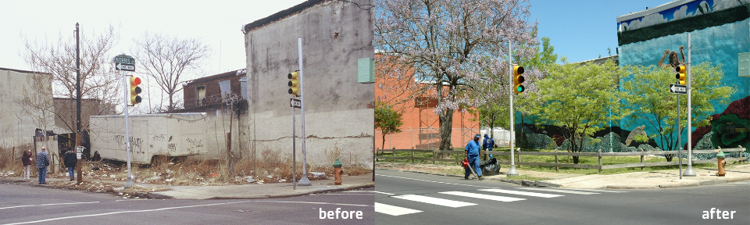
Kondo's numbers are hard to argue with. Older Americans in the greenest parts of the country file, on average, $944 less in annual health claims than those in the least green areas (Kondo, Steed, Johnson, & De Roos, 2026, BMC Public Health). Residents under tree cover face 30 to 45% lower odds of gun assault (Kondo, South, Richmond, Branas & Wiebe, 2017, American Journal of Epidemiology). In a citywide randomized controlled trial of vacant lot greening with the Pennsylvania Horticultural Society, gun violence fell 29% around greened lots and crime overall dropped 12% (Branas et al., 2018, PNAS) — an effect a 10-year follow-up study found was still holding (Asa et al., 2026, PNAS). The return: $26 to taxpayers and over $300 to society for every dollar spent greening one vacant lot (Branas et al., 2016, American Journal of Public Health).
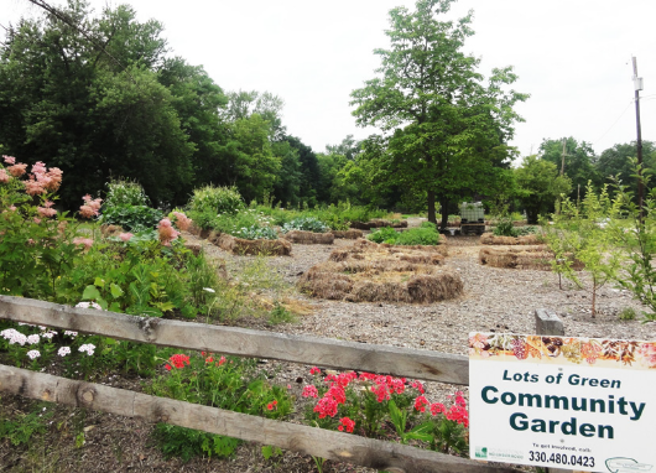
Crucially, the effect is strongest when neighbors, not contractors, lead the work. Comparing contractor-led “clean & green” lots to community-reuse lots in Youngstown, Ohio, Kondo found the community-led approach drove significantly larger reductions in violent crime — consistent with what researchers call the Busy Streets Theory (Kondo & Branas, 2016; Aiyer et al., 2015): cared-for, well-used public space builds ownership and positive social interaction in a way a mowed lot alone doesn't.
Community Uptake Defies Expectations
A June 2026 Suffolk University/Philadelphia Inquirer poll of 500 residents found climate and the environment named as the city's most pressing issue by just 1.2% of respondents — statistically tied for last, dwarfed by crime (29.6%), schools (19.4%), the economy (17.2%), and housing (10.2 %). Against that backdrop, you'd expect real headwinds to wider adoption of environmental practice as a civic priority.
And yet the experience of community-based collaboratives like Deeply Rooted shows demand is high and uptake robust. James Wright is a project manager at the Penn Medicine Center for Health Justice, a collaborative built on the public health research of Dr. Eugenia South (a frequent collaborator with Dr. Kondo). Deeply Rooted works with 26 partner organizations across West and Southwest Philadelphia. To date, it has stabilized roughly 1,000 vacant lots, planted over 1,000 trees, and distributed $281,000 across 99 community green grants over six funding cycles — including a cohort of 18 local high schoolers who spent a summer on participatory research projects and farm visits. Wright was careful to say Deeply Rooted isn't Penn's program with community input — it's the community's program, right down to the name. Careful adherence to core principles of shared power & collective action, trust & transparency, and community benefit has contributed to early success, including opening the first of six community-designed mini parks this spring, at 59th and Media. For institutions like Penn Medicine that focus on evidence-based practice, greening and cleaning interventions expand a health care provider’s toolkit.
Community Activation is an Impact Multiplier
Block by block, parcel by parcel, this work adds up to what Wright and Kondo's research together describe as a thousand flowers blooming across the city. But a cleaned, greened lot with nobody in it is only half the transformation. That's where our third expert panelist weighed in. Greg Thompson, executive director of Haven of Hope & Opportunity and a Southwest Philadelphia ward leader, has cleaned and greened lots on his own initiative and through PHS's same-day work-and-pay program, which pays neighbors $100 for a five-hour cleanup shift. But his real subject on July 31 was what happens after the lot is clean: the programming and site activation that brings people into these spaces for good.
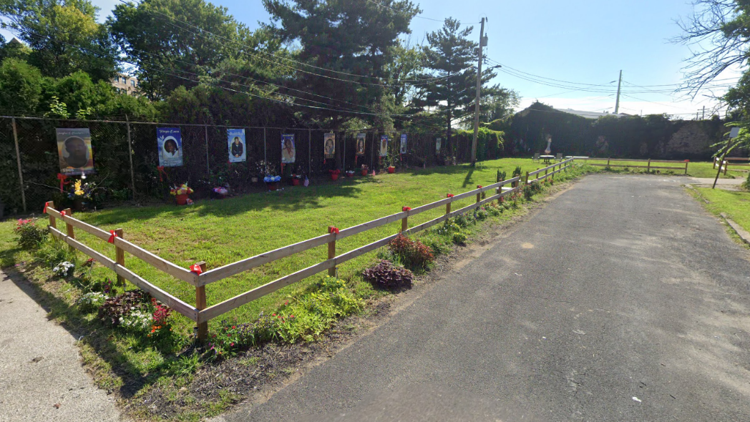
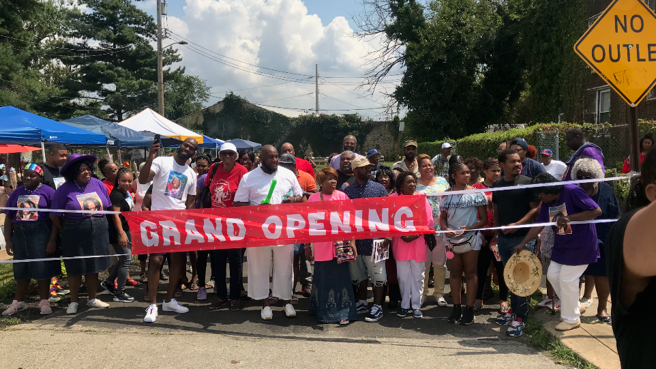
A vacant lot at the end of Thompson's own block, empty for over 40 years, is now the Glenda Ann Christopher Memorial Park, named for a community champion. It's booked most weekends — for birthday parties (including Thompson's own milestone birthday) and funeral receptions alike. Thompson also runs Brother to Brother, a mentorship program that takes about 40 young people ages 8 to 18 on urban camping trips and through rites-of-passage ceremonies several times a year, including one trip that happened to fall the same weekend as a mass shooting two blocks from the campsite — a juxtaposition local news covered. Previously, Thompson spent 15 years working with young men awaiting murder trials. The throughline to his current work, he said, is reaching kids years earlier — seven or eight years old — before that kind of story becomes theirs.
Investing in Clean and Green
Taken together, these are compelling, proven solutions for both community greening AND public safety. So here's the harder point: we're spending nowhere near enough on them.
When it comes to public safety, Philadelphia's single largest budget item is the police, which works out to roughly $550 per person, per year. Against that, our own goal for park investment is $95 per person. The city’s current investment in illegal dumping cleanup adds another $15 per person, per year. Stormwater management adds a whopping $150 per person, with a significant share of that going to green stormwater infrastructure, specifically: rain gardens, street trees, and vegetated surfaces, rather than traditional pipes and sewers. Combine parks, dumping, and just the vegetated components of stormwater management together, and a generous estimate of what Philadelphia is already spending on cleaning and greening interventions comes out to something like $170 per person — under a third of what we spend on policing, but not nothing.
Here's what a serious reinvestment could look like: a 50% increase across parks, illegal dumping, and vegetated green stormwater infrastructure —a meaningful commitment to interventions we already know work — would bring that combined per-person figure from about $170 to about $260. That's a jump from under a third of the police budget to almost half of it, where investment starts looking like a real bet on evidence-based practices for safer communities.
And the panel's evidence suggests that bet would pay off, especially if we do it right. The 29% reduction in gun violence figure for Philadelphia is a floor, not a ceiling, when the investment centers the community doing the work. This panel's case isn't just that cleaning, greening, and public space programming deserve a bigger number, it showed us that we already know how to spend that money well, led by the people who live with the results.


